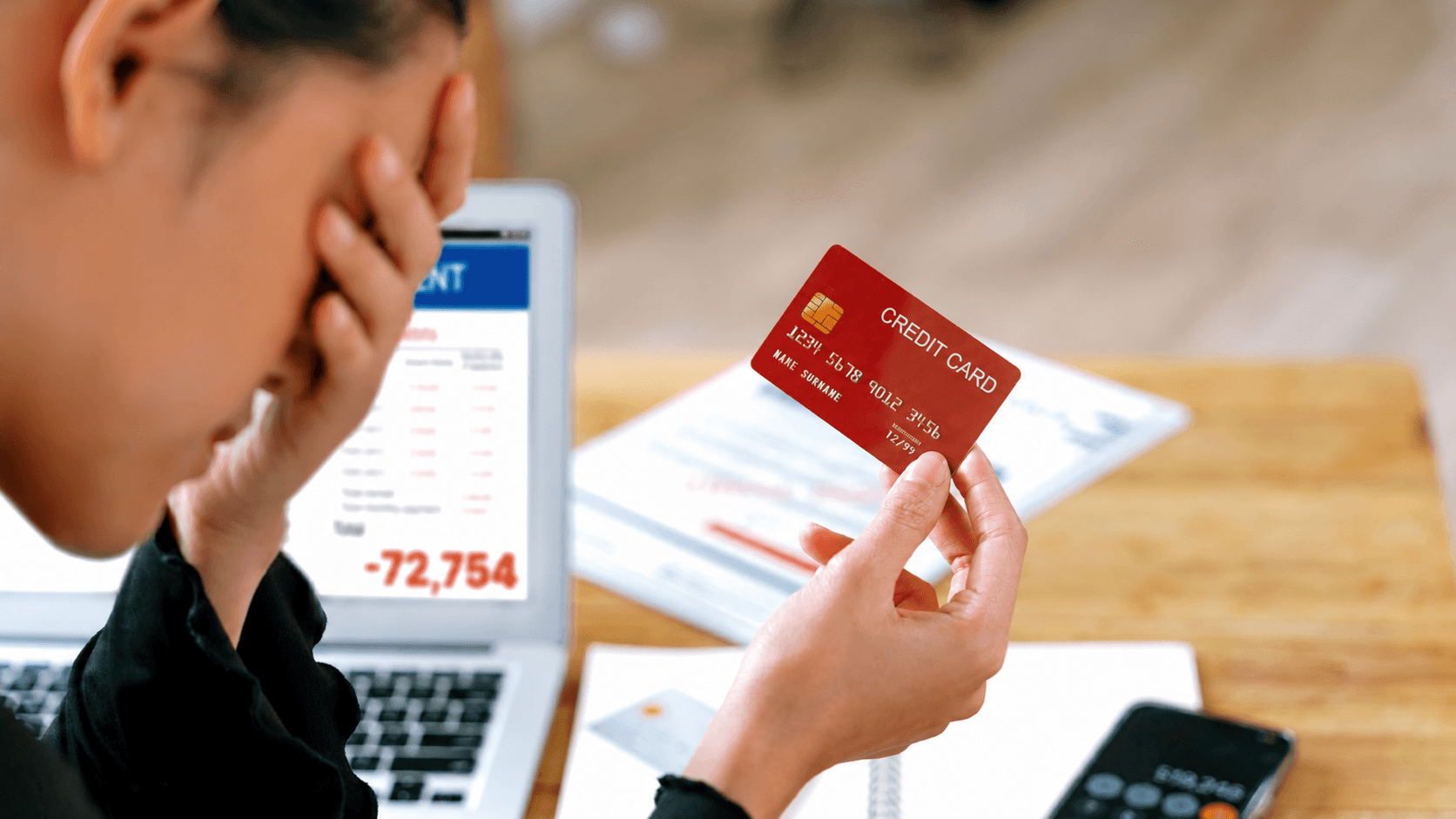
6 Top Strategies to Avoid the Credit Card Debt Trap in 2026
Summary:
High credit card usage increases the risk of overspending and credit card debt traps.
You must pay 100% of the credit card bill before the due date to avoid carrying high-interest balances.
Limit the number of credit cards you own, as multiple cards may increase discretionary spending and the chance of missed payments.
Use EMI options only for planned high-value purchases.
Maintain an emergency fund to reduce dependence on credit cards.
Try to keep the credit utilisation ratio below 30%.
Credit card adoption continues to increase across India. According to RBI data, credit card spending reached a record of ₹2.17 lakh crore in September 2025, growing 14% month-on-month and 23% year-on-year. (Source: ICICI Direct Research)
But why?
Festive season purchases, higher discretionary spending, and GST rate cuts have pushed more consumers to use credit cards for their everyday transactions and high-ticket purchases.
Now, this creates a negative side!
Such as “ease of swiping” for purchases, combined with interest-free periods + high credit limits, increases the risk of overspending and falling into a credit card debt trap.
Don’t want that?
Read this article to check out 6 strategies you may follow in 2026 to save yourself from a credit card debt trap.
1. Buy Only What You Can Afford to Repay
Credit cards give an interest-free period of around 40–50 days. This period allows users to make purchases without incurring interest, provided they pay their full outstanding balance by the due date.
For most cardholders, this creates the illusion of a “free short-term loan”.
The negative impact?
Such a perception leads to unnecessary spending that exceeds the planned budget.
To avoid getting into credit card debt, you must use it only for purchases you can repay from your current income or savings.
Need a tip?
Before making any payment, ask:
Can I pay this full amount when the statement arrives?
If the answer is “uncertain”, don’t use the card for that purchase. Also, limit card use only to fund necessary expenses such as bills, groceries, or planned purchases. Try to avoid impulse buying or luxury spending that your budget does not support.
Additionally, you may also use credit cards with cash back to lower your monthly statements. Such cards can be compared + applied directly on the airpay money app.
2. Pay 100% of Your Credit Card Bill Before the Due Date
Credit cards allow a “minimum amount due,” but paying only this small portion may push you into credit card debt. That’s because the remaining balance starts attracting high interest. Usually, revolving credit limit and cash advances are charged at 2–4% per month (which equals 24–48% per year).
Additionally, once a balance is carried forward, interest applies not only to the old amount but also to new purchases. This removes the interest-free benefit.
Want to avoid this situation?
Try to pay the full statement balance before the due date. You may set up auto-debit from your bank account or use calendar reminders.
3. Limit the Number of Credit Cards You Own
Note that every credit card comes with its own:
Billing cycle
Due date, and
Spending limit
Managing several cards at the same time increases the chance of missing a payment. Even one missed due date can lead to late fees, interest charges, and lower your credit score.
Furthermore, multiple cards also encourage “higher spending” because each card provides additional credit limits. This may lead to purchases that exceed your planned budget and push you into credit card debt.
The right approach?
You may maintain one or two credit cards that suit your spending habits and needs. If you already have several cards, review them and close the ones you do not use.
4. Use EMI Only for Planned High-Value Purchases
Credit card EMIs allow you to divide a large payment into fixed monthly installments. Instead of paying the entire bill in one cycle, the amount can be repaid over 3, 6, 12, or 24 months.
While availing this option, review the full cost before selecting EMI. That’s because banks may charge a processing fee and interest on the converted amount. These charges increase the total amount you pay.
What can you prefer?
Some merchants offer “no-cost EMI”, where the interest component is adjusted through discounts. These options are usually better than regular EMI plans.
5. Create an Emergency Fund to Reduce Credit Card Dependence
Many people fall into credit card debt due to unexpected expenses, such as:
Medical bills
Distress travel plans, or
Urgent home repairs.
In most cases, when savings are not available, the credit card becomes the immediate source of money. But that’s the wrong approach! Instead, you may build an emergency fund equal to 3-6 months of living expenses. This fund can be maintained in a savings account or invested in a liquid mutual fund scheme.
6. Keep Your Credit Utilisation Below 30%
Credit utilisation refers to how much of your available credit limit you use. It is calculated by comparing your:
Outstanding credit card balance with
The total credit limit
As per industry understanding, the higher your credit utilisation ratio, the higher the risk of falling into credit card debt.
But why?
It increases the repayment burden in the next billing cycle. If the full statement amount cannot be cleared, the unpaid balance begins to attract high interest charges. Gradually, this interest adds to the outstanding balance and makes repayment more difficult.
Conclusion
So now you know that a credit card debt trap occurs when unpaid balances start to roll over monthly, along with the accumulation of interest charges. Such a situation increases repayment pressure and may damage your credit score. To avoid such a credit card debt trap in 2026, you may:
Always pay 100% of the statement amount before the due date.
Keep credit utilisation below 30% of the limit.
Maintain an emergency fund for unexpected expenses.
Looking for credit cards with cashback in 2026?
Apply for them online through the airpay money app. We are a 360-degree financial wellness mobile application trusted by 1,00,000+ users. Here, you can explore and filter multiple credit cards across categories such as travel, rewards, shopping, lifestyle, and more.
Disclaimer: This content is for informational purposes only and does not constitute financial advice or a recommendation to apply for any specific credit card. Credit card issuance is subject to eligibility criteria, credit evaluation, and approval by the respective issuing bank. Interest rates, fees, rewards, and other benefits are governed strictly by the issuer’s terms and conditions and may change without prior notice. Failure to make timely payments may result in interest charges, penalties, and an adverse impact on your credit score. Readers are advised to review all card-related documents carefully and evaluate their repayment capacity before applying. airpay money acts only as a distributor and does not provide credit advisory services or guarantee approval. |